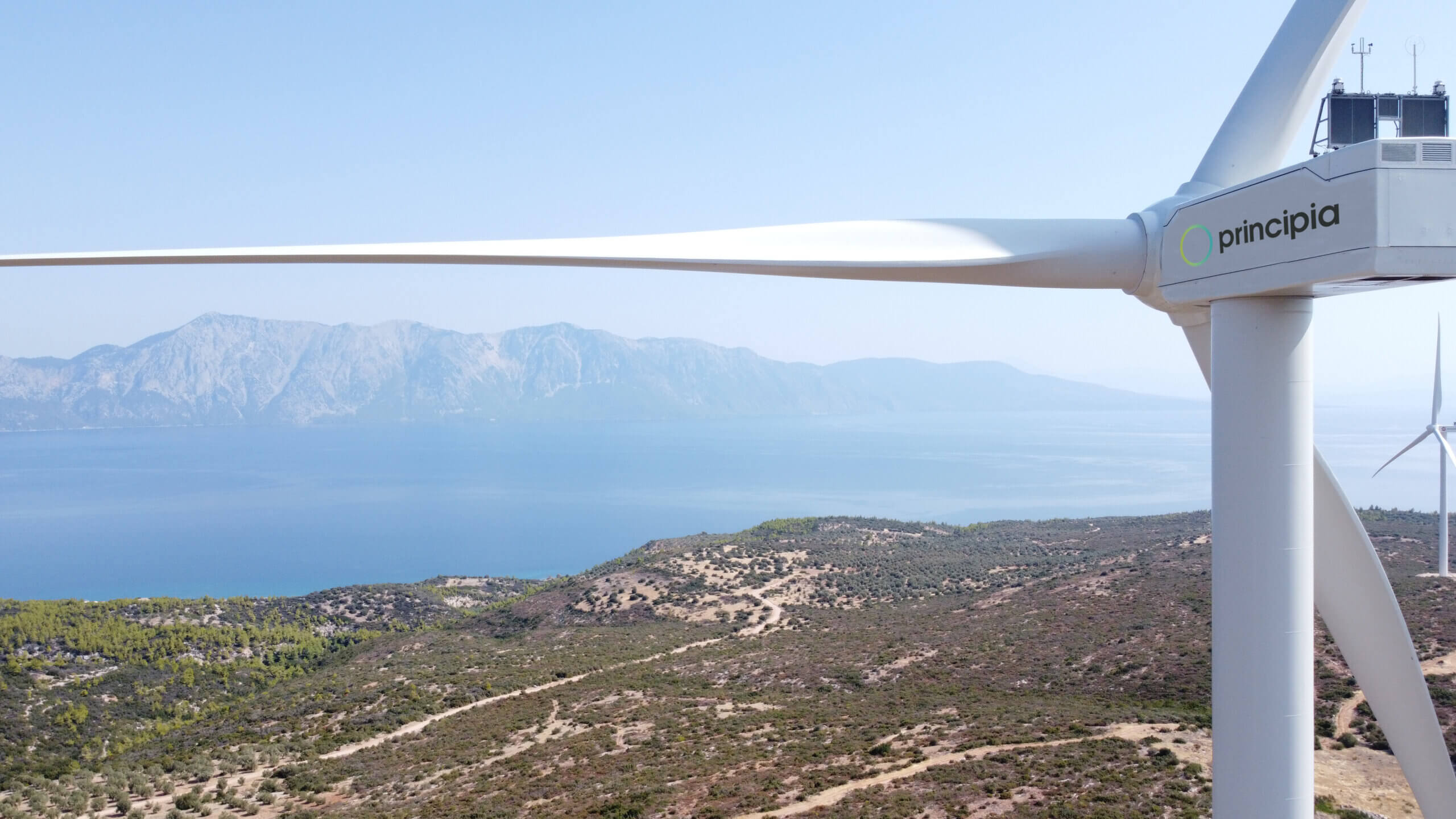
By Apostolos Panos, Chief Commercial Officer of Principia
The Greek storage market has already made substantial strides in terms of institutional design in 2021–2022. The basic regulatory framework has been formed, ~900 MW tenders have been launched and the foundations have been laid for the integration of storage into the system. However, at the implementation level, the picture remains weak. To date, no battery project has been linked, which shows that the market is still at the starting point.
It is to be expected that each new market needs time to mature. This is crucial, as the NECP's target of ~4 GW by 2030 is not only ambitious, but necessary for the continuation of the energy transition. At the same time, investment interest is already exceeding forecasts, with requests for standalone plants above 50 GW. The key issue today is not demand, but speed of implementation.
Electrification Battery Projects
The delay in the electrification of battery projects is not due to either the lack of interest or the inability of investors to proceed with their projects, but mainly to the delays of the very framework in which these projects had to mature and finally operate. Although these were projects with strict schedules due to the Recovery Fund, there was no corresponding acceleration procedures. Significant delays were recorded in the issuance of Connection Terms, but also at the level of local services and individual licensing procedures.
The main issue, however, was found in the interconnection infrastructure, whether it was a new Substation, an extension of an existing one, or the interconnection lines themselves. As a mitigating circumstance for IPTO, it must be recognized that the successive legislative interventions for the prioritization of the Connection Terms created a complex environment, with multiple categories of projects claiming priority at the same time. This led to ambiguity as to the order of examination. All this, even when it became clear that the plants would be considered with absolute priority, the times for both the issuance of Connection Terms and the association contracts were longer than expected.
With pressure on the Ministry of Environment and Energy and the competent bodies, several of these issues proceeded. Although some projects were technically ready for electrification as early as the end of 2025, they could not operate due to shortcomings in the regulatory framework. In particular, the contractual framework with DAPEEP had not been completed in time, the framework of representation through FOSE had not yet been fully activated, while basic technical rules for the participation of battery projects in the markets were also pending.
Today, most of these issues have now been resolved, even with a significant economic impact on investments. For this reason, the first battery plants are very close to being electrified in April, which will essentially mark the real start of the market.
Regulatory framework
Greece moved early on at the level of institutionalization, but after five years it has still not managed to electrify its first project. Its initiatives have not been transformed into operational projects, while other countries in the region, such as Bulgaria and Romania, already have projects in operation and are expected to exceed 1 GW within the year, so it is clear that they have done something better - and especially faster - than us.
The difference is not so much in the targeting as in the application. In countries such as Italy, Bulgaria and Romania, access to electricity was given more directly and more clearly, while the licensing process followed a shorter and less complicated route. At the same time, the support schemes adopted also played an important role. And here it is interesting that in several cases these tools were applied later than the corresponding Greek ones, but they worked more effectively, precisely because they were combined with faster procedures and greater predictability.
Strong investment interest
The market recognizes that storage is a key tool for managing the high penetration of renewables, as well as green energy cuts that are increasing exponentially. There are still open issues as to the prioritisation of different categories of projects, which directly affect the market. There are significant delays in the issuance of Connection Terms for merchant projects that will ensure electrical space through the relevant invitation of the Ministry of Environment and Energy, as there was also a delay in the adoption of the regulation that allows the integration of storage in existing projects and mature projects with Connection Terms.
Although the relevant framework now exists, it is not yet clear with what priority these requests will be examined and will receive Terms of Association. Will they be examined in parallel, will they precede or follow? This ambiguity creates uncertainty in the investment environment. There is therefore a risk that some investments will be postponed or lost, because the predictability required to make final investment decisions is undermined.
Projects without aid
Banks have already demonstrated that they can finance storage projects, especially when there is a more protected revenue profile, as was the case with tender projects. Caution is mainly found in projects without aid. There, revenue is not guaranteed and depends on the spread and market participation. This significantly increases the risk. In practice, this implies stricter conditions and selective financing, especially to large and reliable investors.
In other words, there is no lack of interest from the banking system, but there is an adjustment to higher risk, especially when mechanisms that enhance cash flow predictability are missing. And in this environment, ensuring a minimum level of regulated revenue for batteries becomes crucial to enable the market to grow at scale.
Interventions that can accelerate growth
In the current context, it is necessary to ensure the timely electrification of storage units from the first two tenders and their smooth operational integration into the system. At the same time, a review and, where necessary, an extension of the contractual completion timelines of the projects of the third tender will be needed to ensure their smooth completion.
At the same time, there must be initiatives for the issuance of Connection Conditions to additional storage units — both through the Ministry of Environment and Energy's Invitation for merchant projects and through the integration of storage solutions into existing projects — based on the existing regulatory framework. Dialogue and technical cooperation with market operators (ENEX), system operators (IPTO) and the regulatory authority for the adaptation of market rules and operational procedures will result in a more efficient and safer use of the potential of storage systems.
It is also necessary to design regulatory proposals and put forward policy measures aimed at improving the investment profile of storage projects – including the formulation of new support schemes incorporating best practices from Europe. This initiative will include a benchmarking of support frameworks in countries such as Italy and Bulgaria and proposals for combined adaptation in the Greek context.
Factors that cause uncertainty
Our country has already lagged behind the initial call for standalone batteries of 4.7 GW without aid. The announcement of the selected projects was scheduled for the end of 2025, while the evaluation committee was only recently established.
However, the key issue is not only the evaluation, but mainly the next stage: the issuance of Connection Terms and the actual ability of the system to absorb the power. Grid analysis and finding electrical space are complex and time-consuming processes, resulting in uncertainty about what percentage of projects will go ahead. Even after selection, it will take time to ripen. Realistically, a significant portion of the projects will hardly be ready for construction before at least a year has passed.
Creating support mechanisms
Sustainability is highly dependent on revenue predictability. In the case of storage, we are talking about a technology that is still at a relatively early stage, without a long operating history of 10–20 years, which allows safe conclusions about the return on investment, which increases the perceived risk. Revenues depend on market conditions and exhibit high volatility.
In this environment, support mechanisms – whether investment or operational – are crucial. They enable project implementation, create track records, and enhance market maturity. The strong interest recorded in the tenders shows that capital is available, provided that the risk is manageable. In the long run, the market may move towards merchant models. At this stage, however, support remains a key condition for scale growth.
Revenue as an unexpected factor
In the current situation, with increased penetration of RES and intense phenomena of oversupply mainly from photovoltaics, the spread is particularly favorable, however, these conditions are not stable. The entry of significant storage capacity in the Greek and interconnected markets, the possible slowdown in investments in RES, but also the increase in demand due to electrification (electrification, heat pumps, data centers) can lead to price convergence and, by extension, to a reduction in the available spread. At the market level, most of the revenues, especially in the long term, come from the day-ahead market, which remains dependent on supply and demand conditions. Balancing and ancillary services markets can offer high profit margins, particularly for first-time projects to operate. However, they are markets with limited volume and, with the introduction of new storage units, they are expected to saturate relatively quickly.
The storage projects are supportive of RES and the operation of the system. Due to their nature and technological flexibility, they have the ability to respond in real time at the millisecond level to the Administrator's commands, absorbing or injecting energy according to the needs of the system. In more mature markets, storage systems participate in all individual markets, without restrictions, taking full advantage of their features. In Greece, on the contrary, the framework continues to include static constraints, such as injection limits, that do not reflect the dynamics of the technology.
The aim is to create a correspondingly flexible operating framework, in which they will be able to offer services at any time in all markets without restrictions, achieving the so-called revenue stacking, which makes investments more economically viable.
The future of the storage market
The next two years for the energy storage market are crucial. The first milestone is the activation and smooth operation of the first projects, which will be the first test of the framework. Second, progress in issuing Connection Terms for new projects, both for merchant projects and for adding storage to existing projects. The third concerns the next step at the level of market and support, i.e. whether there will be continuity in competitive processes or capacity flexibility compensation mechanisms that will offer greater visibility of revenues and therefore better financing conditions.
However, the success of storage projects will not only be judged by their response to the quantitative targets of the NECP. The installed power is significant, but it is not enough on its own. Success will mainly be reflected in whether storage will substantially improve the operation of the system, whether energy cuts from RES will be significantly reduced, whether the green energy produced will be better utilized and whether the overall stability of the market will be enhanced.
The above is extracted from Apostolos Panos' interview to Lalela Chrysanthopoulou, published on energygame.gr and powergame.gr, on 31/3/2026.