The development of Renewable Energy Sources, storage, grids, energy markets and sustainability requirements have created a field where many different specialties meet. This means that a young person can reach the energy sector through different studies and paths.
From the Polytechnic schools to the labor market
The most direct connection is, of course, with the technical and polytechnic schools. Electrical engineers deal with electrical systems, substations, networks, interconnections and technical specifications of projects. Mechanical engineers can work in the operation and maintenance of installations, equipment assessment and performance improvement, while civil engineers are involved in the design and construction of the infrastructure a project needs, from access roads and bases to accompanying technical projects. Finally, surveying engineers contribute to the siting, measurements and mapping of the areas where the projects are developed.
Through these studies, one can be employed in roles related to the development, construction, connection, operation, and maintenance of RES projects. For example, a young professional may work as a construction or maintenance engineer, a grid connection specialist, or an asset performance analyst. These are roles that are not limited to the completion of a project, but continue throughout its lifetime, through production monitoring, technical support and solving everyday issues.
Multiple professional roads to energy
An important path to energy is also environmental sciences. Every RES project must be considered in relation to the environment, land use, biodiversity and the conditions set by the legislation. Graduates of environmental sciences, geology, forestry, biology or related subjects can work on environmental studies, permitting, monitoring of environmental terms, ESG reporting and sustainability actions. This work requires cooperation with technical teams, researchers, public authorities and local bodies.
Environmental sciences are also an important path to energy. Every RES project must be considered in relation to the environment, land use, biodiversity and the conditions set by law. Graduates of environmental sciences, geology, forestry, biology or related subjects can work on environmental studies, licensing, monitoring of environmental terms, ESG reporting and sustainability actions. At the same time, economists and business administration graduates deal with project financing, procurement, market analysis and investment management, as every energy project requires complex financial planning.
The legal sector is also a key pillar of the energy market, as projects require contracts, permits and compliance with a complex regulatory framework. At the same time, IT, data science and automation studies are becoming increasingly important. The operation of modern energy installations is based on data, monitoring systems, production forecasting and cybersecurity, creating new professional opportunities. Finally, the industry also needs specialties from communication, marketing, HR and social sciences. Energy is not only technology: it is also information, cooperation, corporate responsibility, relationship with local communities and development of employee talents.
A journey with many routes
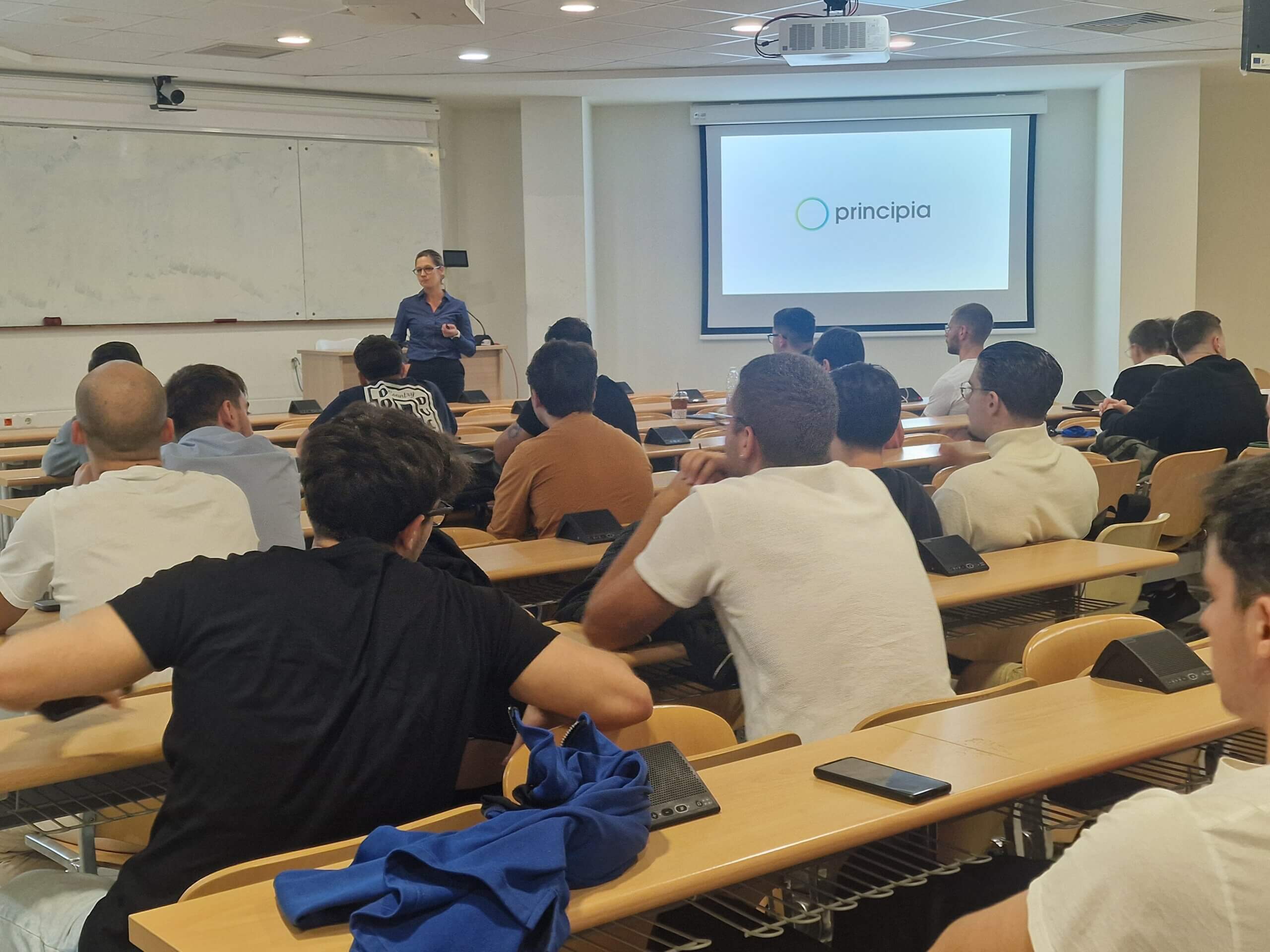
At Principia, we believe that the connection of students with the labor market should begin as early as the years of study. For this reason, we systematically participate in University Career Days, welcome students to our facilities and plants, present the prospects of the industry to young professionals and support student groups and initiatives related to innovation, engineering and sustainable development. Through these actions we seek to bring students closer to the real applications of energy, to share know-how and to support their academic and professional path.
The path from university to the energy industry is not the same for everyone. It can start from a polytechnic school, a department of environment, economics, law, IT or communication. What unites all these routes is the potential to contribute to an industry that is constantly evolving and at the heart of the energy transition. Diverse knowledge and skills are what drive innovation and shape the energy future.